
Sor’s 27 Free To Everybody files
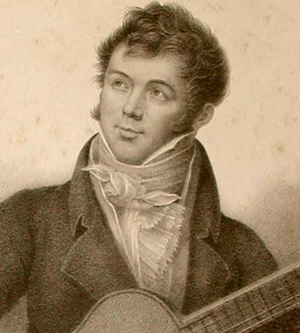
Sor’s 27 FREE TO EVERYBODY pieces from Tecla Editions are a free anthology or sampler from Tecla especially for students the world over who in this way can find out about this composer. All these 27 pieces are taken directly from the printed version of my edition of Sor’s New Complete Works for Guitar. The full list of these FREE TO EVERYBODY files is below. These FREE TO EVERYBODY pieces are examples from the full range of Sor’s work for guitar. But in these free pieces I have showcased especially dances by Sor that are seldom played: waltzes, mazurkas and galops that are full of energy and fun. They are a big part of his achievement which is seldom recognized, so I have put about eight dances in this FREE TO EVERYBODY section.
Guitar teachers may find these free pieces useful to their students as a way for them to see an overview of the output of Sor. Feel free to recommend them to go and get any or all of these free Sor items from Tecla. Also, these free pieces may help a lot for students in countries such as Mexico or South America where it isn’t easy to get printed music. And moreover all these 27 free Sor pieces from Tecla are legal – this way your students don’t put themselves in the position of using illegal photocopies or illegal pirate scans.”
- Brian Jeffery
The FREE FOR EVERYBODY pieces are:
FREE SAMPLE: March, op. 1 no. 6
A fine military march from Sor’s Six Divertimentos op. 1.
Full version available as a PDF download.
This splendid military march for guitar by Sor appeared in London just a few weeks before the Battle of Waterloo in 1815. Sor had just arrived in London from Paris – how he got a ticket, when thousands of British were fleeing from Paris as Napoleon newly escaped from Elba approached, we’ll never know – and the streets of Paris and of London must have been full of detachments of soldiers, each marching with its own military band.
Those military bands used woodwind instruments and lots of brass, and that is surely what we hear in this piece – the full band in most of bars 1-14, then a different group of instruments in the minor at bar 15 followed by the melody in the treble at bars 16-18. The same pattern again at bars 19-22. There’s a shake-up with the change of key at bars 24-25 and a quieter part from bar 27, and the full band at the end of the piece.
FREE SAMPLE: Andante largo, op. 5 no. 5
A famous piece, dedicated to Sor’s wife, from his Six petites pièces op. 5.
Full version available as a PDF download.
This is a famous piece which Sor dedicated to his wife and published in Paris in 1814. They had left Spain during the war there the year before in 1813 protected by a strong French military escort, and Sor had just begun his career in Paris as a musician.
Don’t play this famous piece too slowly. Andante at that time did not necessarily mean slow as it usually does now! It only meant “keep a steady beat”. So try this as a simple very steady Largo. Don’t let the eloquent ornamentation slow the piece down.
If you play the piece as though the melody were a voice singing, you won’t go far wrong.
You can hear this Andante largo played by the famous Argentinian guitarist Maria Luisa Anido here:
FREE SAMPLE: Study, op. 6 no. 1
With a bass line like a voice, from Sor’s Twelve studies op. 6.
Full version available as a PDF download.
In this study op. 6 no. 1 by Sor the bass line is important, so make sure that it is sonorously heard, especially at bars 21-24. It is a good idea to practice playing the bass line by itself, without the higher notes, until you are interpreting and phrasing that bass melody in its own right, and only then gradually add those higher notes.
This piece opens the collection of twelve studies which Sor published in London in about 1815/17. They were the first of Sor’s many famous didactic pieces for the guitar. Sor was about 37 and at the height of his powers, enjoying great success in London after he had been forced to flee from Spain at the end of the Peninsular War. His concerts and pupils were many; his songs poured from the presses; and the manager of the King’s Theatre, John Ebers, called him “the extraordinary Spaniard Sor, who is known to be the most perfect guitarist in the world”.
FREE SAMPLE: Minuet and Waltz, op. 8 nos. 1 and 2
from Sor’s Six Divertimentos op. 8.
Full version available as a PDF download.
FREE SAMPLE: Folies d’Espagne, op. 15(a)
A favourite piece (theme and variations 1 2 and 3 only).
Full version available as a PDF download.
FREE SAMPLE: Sonata in C, op. 15(b)
A famous piece (first page only).
Full version available as a PDF download.
FREE SAMPLE: Waltz, op. 18 no. 5
A waltz full of life, from Sor’s Six Waltzes op. 18.
Full version available as a PDF download.
This waltz by Sor, op. 18 no. 5, is full of life. It has the sixth string tuned down to D, which gives the instrument a greater sonority. It begins with a low bass sound like the cellos of an orchestra getting into its stride, before reaching up in the major section from bar 17 onwards to the high F sharp and high E like violins on the top string.
The waltz was all the rage at the moment when Sor published this collection in Paris. I’m sure that this piece should be played with great energy and very much with the dance-floor in mind.
FREE SAMPLE: Studies, op. 29 nos. 20 and 21
From Sor’s Twelve studies op. 29 TRY THIS: If you follow the instructions that Sor gives at the head of his study op. 29 no. 20 and inside it, you get a magical way of performing and hearing it. I haven’t ever heard it played following Sor’s instructions – get the free piece at the link just above and give it a try!
Full version available as a PDF download.
These two studies by Sor, op. 29 nos. 20 and 21, give you the chance to play something magical, a sound-picture very different from usual.
First of all, study no. 20 uses the scordatura of tuning the sixth string of the guitar down to D, which in itself gives a rich sonority.
Then as you can see Sor writes that the piece should be played “presque piano” (almost piano). Not only that, but he writes that “the strings should be plucked at the point where the vibrations will last longest”, by which he no doubt means to pluck them near their centre, near the sound-hole. So the sound is already very different from usual.
But the very special feature of this piece is that it uses the old Spanish technique of campanelas in which an open string sounds repeatedly through moving chords, and also it has the left hand high up on the instrument. The fingering at bars 25-26 shows this, which is the only fingering which Sor gave in all the studies opp. 6 and 29. That fingering shows that the top A at bars 25-26 is on the second string not on the first string, and that top A no doubt continues to be on the second string through the rest of the piece.
So if the player uses those campanelas and also follows Sor’s recommendations about playing softly and where to pluck the strings and where to finger them with the left hand, a most marvellous and exceptional sound picture can be produced.
The melody in the bass (sometimes the melody is in fact in the middle voice with sonorous bass notes below it) needs to brought out throughout.
Study no. 21 is entirely in harmonics.
These studies come from Sor’s second book of twelve studies, op. 29, following on from his first book of twelve studies op. 6, and was first published in Paris in 1827, that is to say just after he arrived back in Paris from Russia, which makes it likely that he composed this second set of studies op. 29 while he had been in Russia.
FREE SAMPLE: Lesson, op. 31 no. 3
From Sor’s 24 progressive lessons op. 31.
Full version available as a PDF download.
This lesson by Sor, op. 31 no. 3, begins with a simple melodic line with open basses, then adorns the melodic line with a good many “pull-offs” especially for the series of bars 9 to 12 and then for the faster notes of bar 21.
It comes from Sor’s 24 progressive lessons op. 31 which he published in Paris in 1828, that is to say shortly after he returned to Paris from Russia in 1827. Whereas the pieces in his Twelve studies op. 29 of 1827 had been at professional level, now in this new collection he specifically writes for beginners. Indeed, the title-page of the first edition of op. 31 states that the pieces are for “les Elèves Commençants” (beginning pupils). From now on in Paris he became a professional teacher of the guitar as well as a performer at the highest level.
FREE SAMPLE: Mazurka, op. 32 no. 4
A fine dance from Sor’s Six petites pièces op. 32.
Full version available as a PDF download.
This mazurka by Sor should be played very much with the dance-floor in mind, with plenty of rhythm. The mazurka was already popular in Paris ballrooms when Sor published this example there in 1828, and he counted many young ladies among his pupils who would certainly have been very interested in dancing.
Sor uses the scordatura of the sixth string to D which gives extra sonority and also enables almost all the bass notes to be on open strings.
This is a piece for beginners on the guitar, as we can see from the title-page of the collection from which it comes, Six petites pièces faciles et doigtées avec soin (Six short and easy pieces, carefully fingered).
FREE SAMPLE: Galop, op. 32 no. 6
From Sor’s Six petites pièces op. 32. A splendid dance – try it very fast.
Full version available as a PDF download.
This galop by Sor was absolutely up to the minute in dance terms when he published it in 1828, because the galop as a dance had only just been introduced to Paris ballrooms at that moment. The galop went very fast, hence its name, from a horse’s gallop. The galop was the ancestor not only of the polka but also of the can-can which as is well-known can sometimes go at breakneck speed.
So this Galop, like the Mazurka which is also from this op. 32, should be played fast and very much with the dance-floor in mind, with immense liveliness. And whereas the mazurka may have been fast, this galop was surely even faster.
It shows Sor’s intense interest in dance. He was himself a skilled dancer. He counted many young ladies among his pupils who would certainly have been very interested in dancing. His talented young daughter Caroline who was with him in Paris at that time would certainly have gone to dances and if her father was so up-to-the-minute about dances, did he accompany her to those Paris dances?
This galop is intended for beginners on the guitar, as we can see from the title-page of the 1828 collection from which it comes, Six petites pièces faciles et doigtées avec soin (Six short and easy pieces, carefully fingered).
You can hear this Galop played by Marek Cupák here.
FREE SAMPLE: Cantabile from Sor’s L’encouragement op. 34
A famous piece for two guitars. First movement only.
Full version available as a PDF download.
FREE SAMPLE: Exercise, op. 35 no. 5
From Sor’s 24 very easy exercises op. 35.
Full version available as a PDF download.
This exercise op. 35 no. 5 by Sor gives practice in keeping a repeated pattern going from beginning to end. The tempo Allegretto shows that it should be performed without slowing down, and lightness in playing will certainly make it easier.
FREE SAMPLE: Exercise, op. 35 no. 22
A famous piece from Sor’s 24 very easy exercises op. 35.
Full version available as a PDF download.
When playing this famous exercise by Sor op. 35 no. 22, make sure that the melody in the treble is clearly held and heard throughout. The tempo Allegretto shows that it should not be played too slowly.
FREE SAMPLE: Waltz
A fine waltz for two guitars from Sor’s Six valses op. 39.
Full version available as a PDF download.
FREE SAMPLE: The theme from Sor’s duet for two guitars Les deux amis, op. 41.
FREE SAMPLE: Waltz, op. 43 no. 6 From Sor’s Mes ennuis op. 43.
Full version available as a PDF download.
The first four introductory bars of this waltz by Sor op. 43 no. 6 no doubt recall the first bars of a band playing a waltz in a ballroom. Play this splendid waltz always with the dance-floor in mind.
This waltz has the scordatura of the sixth string to D, which enables many of the bass notes to be on open strings, thus making the piece easy for beginners.
This piece comes from Sor’s Mes ennuis op. 43, a collection which he published in Paris in 1830 or 1831.
FREE SAMPLE: Cantabile and March, op. 44 nos. 17 and 18
From Sor’s 24 pièces progressives, op. 44.
Full version available as a PDF download.
FREE SAMPLE: Waltz, op. 44 no. 24
From Sor’s 24 pièces progressives, op. 44.
Full version available as a PDF download.
This waltz by Sor is the last piece in the set of 24 pièces progressives op. 44 which he published in Paris in 1830 or 1831. It should be played in very lively fashion. Keep the dance-floor clearly in mind throughout.
FREE SAMPLE: Andante, op. 45 no. 5
A favourite piece from Sor’s Voyons si c’est ça, op. 45.
Full version available as a PDF download.
This Andante op. 45 no. 5 was the first piece by Sor that I played, having found it many years ago in Isaias Savio’s anthology of music by Sor.
Don’t play it too slowly. Andante at that time did not necessarily mean slow as it usually does now! It only meant “keep a steady beat”.
FREE SAMPLE: Galop
From Sor’s Six valses et un galop op. 57. A splendid dance - try it very fast.
Full version available as a PDF download.
This galop by Sor from his op. 57 is up to the minute in dance terms, because the galop as a dance had only just been introduced to Paris ballrooms, apparently in the late 1820s. It has rhythmic strength and it shows Sor’s intense interest in dance.
We can assume that it should be played very much with the dance-floor in mind, with plenty of rhythm. The mazurka and the waltz may have been fast, but the galop was surely even faster, hence its name, from a horse’s gallop. The galop was the ancestor not only of the polka but also of the can-can which as is well-known can sometimes go at breakneck speed. So try this one fast!
Sor counted many young ladies among his pupils who would certainly have been very interested in dancing.
This piece comes from Sor’s Six valses et un galop op. 57 which he published in Paris in 1834-35.
FREE SAMPLE: Andante and Allegro, op. 60 nos. 14 and 15
From Sor’s Introduction to the study of the guitar op. 60.
Full version available as a PDF download.
FREE SAMPLE: The theme from Sor’s duet for two guitars Souvenir de Russie, op. 63.
From Sor's Souvenir de Russie, Op. 63 for 2 guitars
Full version available as a PDF download.