
Tracy Silverman: rocker, jazzman, classical player and instrument inventor
By Ross Boissoneau
Growing up, Tracy Silverman was enamored of the sounds of his favorite artists. He wanted to be able to shriek and growl like Jimmy Page and Jimi Hendrix, bend notes and strum rhythms like Eric Clapton and Duane Allman.
One problem: He played violin, not guitar.
“Guitar was the most important instrument in popular music. All my friends were listening to guitar – Eric Clapton, Jimi Hendrix, the Allman Brothers, Santana. They were uninterested in the classical violin stuff I was doing,” says Silverman. “The guitar had replaced violin in contemporary music culture.”
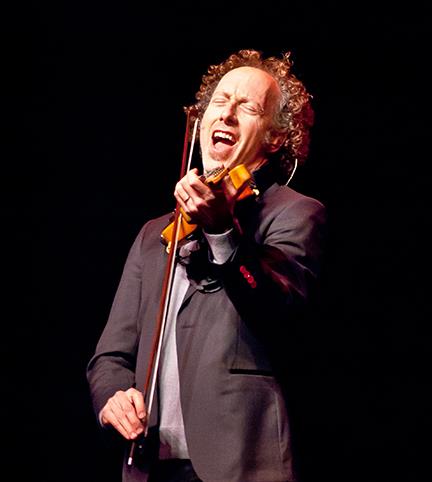
Tracy Silverman
And with Silverman, at least to a degree. While he enjoyed playing classical music on his chosen instrument, he bemoaned the lack of relevance it had to himself and those around him. He yearned to break free, beyond the traditional boundaries of classical composers.
So did he take up guitar after all? Well, for a while. After graduating from the famed music school Julliard, he ditched his violin and picked up a guitar. But he soon realized that wasn’t the answer. “If I worked hard on guitar, I could be one of a million mediocre to fairly good guitarists,” Silverman says.
Since he was already more than proficient on violin, he just decided to make it work like a guitar. So he decided to add two bass strings to his violin and properly electrify it.
Why reinvent the wheel, or in this case, the violin? After all, it’s served players for some six centuries. Cue “The Wind Cries Mary.”
“It’s pretty simple: I wanted to sound like a guitar,” says Silverman. “My inspiration was to be relevant.”
Silverman and his friend Mark Wood began experimenting, inviting charges of heresy by adding bass strings and frets to a solid body. “I wanted … not just amplified acoustic, but real electric, for rock and roll, not jazz. I was very much in the rock and roll and pop world. I was writing pop, playing violin in guitar-like manner.”
It was all going so well when he suddenly found himself plunged back into the world of the traditional acoustic four-stringed violin. With a twist: He was asked to play jazz with the Turtle Island String Quartet.
“I had always been a jazz fan,” he says, and was playing whatever was needed on a gig. With a but: “I was not looking to play jazz.” Indeed, the draw of distortion, wah-wah and feedback and playing rhythm like a guitar was always the inspiration. “I wanted to be the first rock violinist.”
So when TISQ (now shortened to Turtle Island Quartet, or TIQ) came calling, he had a decision to make. And somewhat surprisingly, it was the acoustic jazz setting that won out. “I had gotten nowhere as a rocker. When the gig came along, there was a record deal, a manager – real stuff.” And just like that, he was back playing in that most traditional string setting, a quartet with another violin, viola and cello. Only instead of Bach, Beethoven or Mendelssohn, it was music by Monk, Miles, Trane and Bird. With an occasional nod to his rock side, as the odd composition by Hendrix sometimes made its way into the band’s setlist.
“It was absolutely the right decision,” Silverman says today of his four-year tenure with the band. “It was my first big gig. It put me on the map. I loved it. I had a different (long-term) vision, but knew it would be foolish to pass up this.
“I tell my students all the time, know what you’re shooting for, but anything is better than waiting to hit the bullseye.”
He played with the band from 1993 to 1997, but eventually he did pursue that other vision, and his quest for relevancy continues to this day. Armed with his latest six-string electric axe, Silverman is just as liable to play Led Zep as Mozart, though he still performs as a soloist with orchestras. He’s performed electric violin concertos written specifically for him by composers such as John Adams, Terry Riley and Kenji Bunch, as well as writing and playing three concertos of his own.
For Silverman it all goes back to those guitarists he grew up on, who would set up the song or the solos by locking in on the rhythms, reveling in the power of the groove. Which he says is not respected the way it should be. “Grooving on the violin is common in bluegrass, folk, Cajun and Celtic music,” he says. And in dance music as well, whatever the century. “Bach based his dances on it.”
He now works to advance the power and respect of rhythm playing and the groove, both through his playing and by working with students. He’s authored two books on his innovative strum bowing rhythm playing, The Strum Bowing Method: How to Groove on Strings, and The Rhythm String Player: Strum Bowing in Action, as well as several etude books and teaching online courses on his Strum Bowing Groove Academy.
And yes, there’s still that rock thing. He formed a number of bands over the years, and is currently working with a group dubbed the Tracy Silverman Project. It includes a former student, Tim Kampen, on baritone cello, who Silverman says is a monster groover – “The two of us are becoming a movement!” Kampen also plays bass guitar, while Futureman (Roy Wooten) from Bela Fleck’s band the Flecktones serves as percussionist, and Silverman’s son Toby plays guitar.
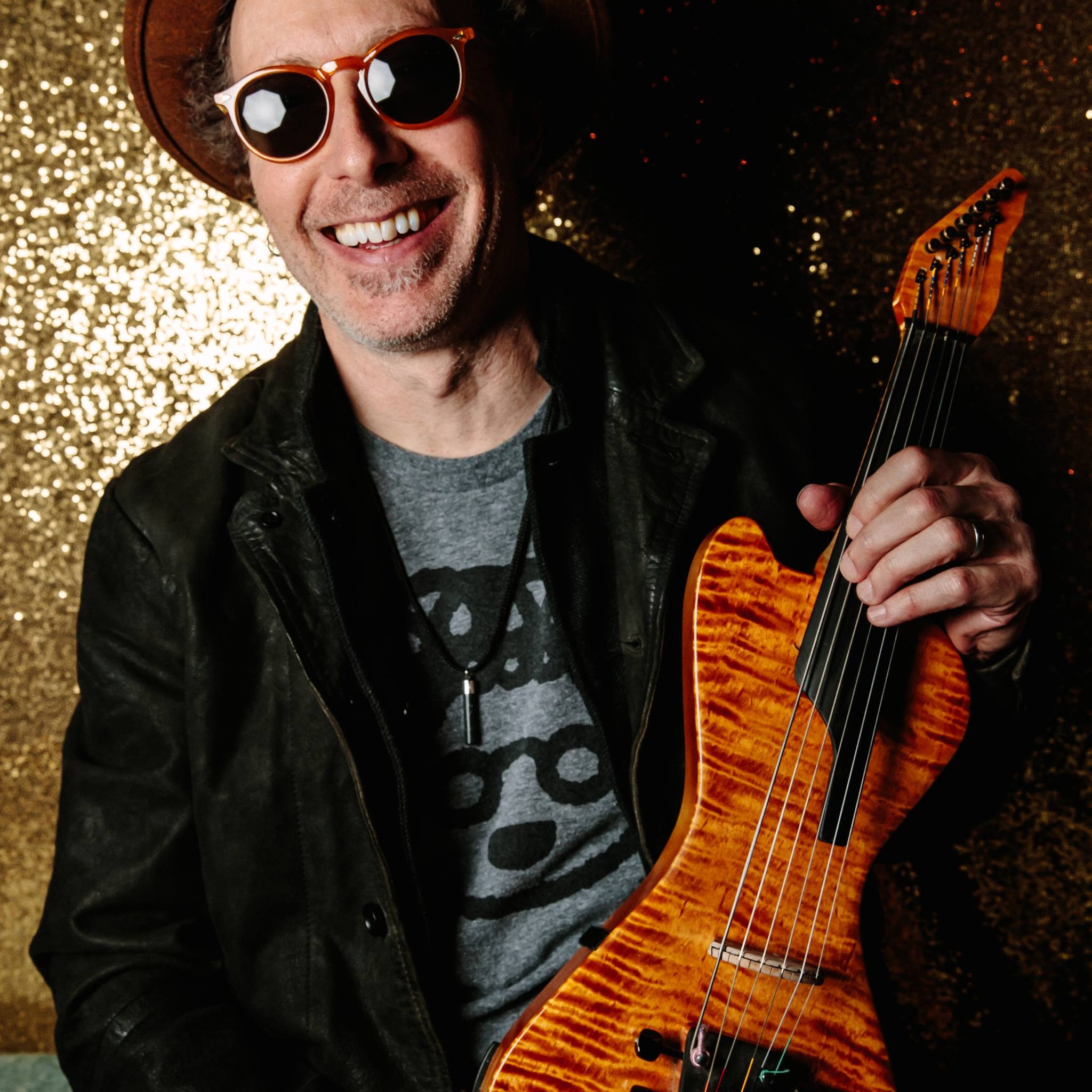
Tracy Silverman
The group plays what Silverman calls “creative derangements” of Stevie Wonder, Jimi Hendrix, Jean-Luc Ponty, Bach, Pharrell and others, as well as a mix of Silverman’s own rock and jazz-infused compositions. “I’m all about advancing for this way of playing,” he says.
Silverman has long been an advocate of Thomastik-Infeld strings. “They’re from Vienna and are big in the orchestral world. I’ve had an endorsement (deal) with Thomastik since Turtle Island. They’re great-sounding and very dependable.
“I keep trying new (strings), like the titanium orchestra. They seem to be my favorite.”
He’s also continuing to advance violin design, working with different luthiers. “My instruments now are hollow-body semi-acoustic. They have more tone than a solid body. They’re my design built by Joe Glaser in Nashville.”
Ross Boissoneau is a regular contributor to Something Else! Reviews, Northern Express and Local Spins. He’s written for the All Music Guide, Jazziz and Progression Magazines, and is a member of the Downbeat Critics Poll.
